
NFC Verification
Verify NFC-enabled passports, ID cards, and drivers licenses with cryptographic checks - confirm document authenticity, reduce fraud, and keep onboarding fast even with risk-based step-ups.
Problem
Why visual checks are no longer enough
Fraud attacks now target what the camera sees and what OCR can be tricked into reading.
Digitally altered images
Edits to name, photo, or expiry can fool even some advanced OCR engines and weak template checks.
High-quality forgeries
Overlays, reprints, and replay attacks stress purely visual controls.
Wrong-person risk
A genuine document can still be used by the wrong person without strong binding.
What is NFC Verification
Introducing Identomat's NFC Verification
NFC adds chip-level proof of authenticity, helping you stop cloned documents and approve real users faster - especially in high-risk moments.
Chip data is signed by the issuing authority.
Data integrity is validated against the security object.
Chip-stored portrait is matched to the user selfie for biometric binding.
How it works
Discover how NFC Verification works
Turn a simple tap into high-assurance verification. Add NFC, configure your decision rules, and go live fast. See how the flow works.
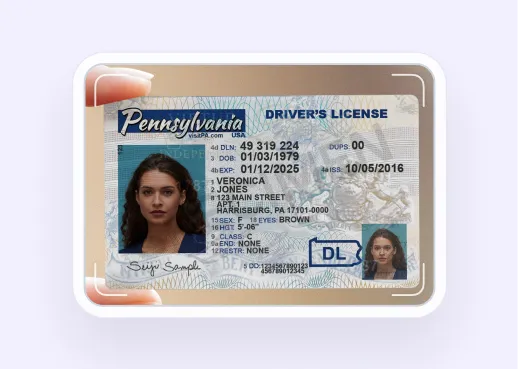
Step 1
Visual Scan
User captures the document visually - standard OCR.
Step 2
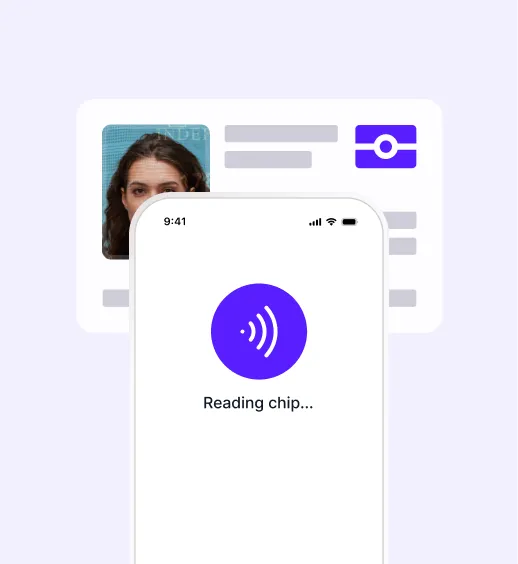
NFC Tap
User taps NFC-enabled ID against their smartphone.
Reads Encrypted Data
Accesses tamper-proof memory
Verifies Signatures
Validates issuing authority.
Biometric Matching
Matches high-res chip photo
Cross-Checks Data
Compares against visual zone
Step 3
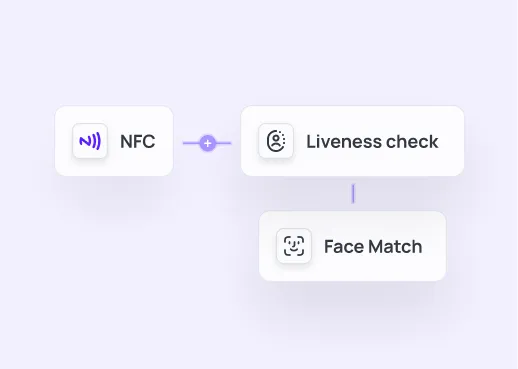
Add-on Steps
Use NFC as a high-trust input, not a silver bullet. Pair with Liveness check and Face Match.
Step 4
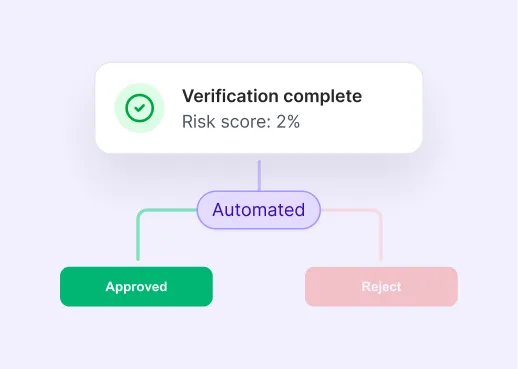
Decision
Results are matched against the document image and onboarding context. You set thresholds and rules for auto-approve, step-up, or manual review.
Use cases
Put NFC to work
From remote onboarding to large payouts, NFC helps you stop forged documents and raise approval confidence in seconds.
Benefits
Chip-level assurance,
real-world impact
NFC adds chip-level proof of authenticity, helping you stop cloned documents and approve real users faster - especially in high-risk moments.
Cryptographic document authenticity
Validate the NFC chip and digital signatures to confirm the document is genuine, not just visually convincing.
Stronger fraud prevention
Detect cloned, tampered, and mismatched documents early to reduce synthetic identity and forgery risk.
Higher approval confidence
Add a high-assurance signal to improve auto-approve vs. step-up vs. manual review decisions.
Risk-based step-up verification
Trigger NFC only when risk spikes (large transactions, new device, geo anomalies, account changes).
Faster, cleaner data capture
Read identity fields from the chip to reduce manual input, typos, and time-to-complete.
Lower manual review volume
Resolve more borderline cases automatically by adding a cryptographic check to the flow.
Reduced false accepts
Catch sophisticated fakes that can pass photo-only checks by verifying chip data integrity.
Better auditability
Produce clearer verification evidence and outcomes for compliance teams and internal reviews.
Stronger holder assurance
Pair NFC checks with Face Match and liveness to confirm the user is the rightful document holder.
Lower fraud losses in high-value flows
Protect withdrawals, payouts, rentals, and limit increases by adding NFC at the moments that matter.
Security & Compliance
NFC you can trust
Chip-based verification backed by strong security standards - built for regulated onboarding, audits, and high-risk decisions.







FAQ
Frequently asked questions
Everything you need to know about the product and billing.
What is NFC verification and how does it strengthen identity checks?
NFC verification reads the encrypted chip embedded in NFC-enabled passports and ID cards. It validates digital signatures from the issuing authority and confirms that the chip data has not been altered. This adds cryptographic assurance on top of visual and OCR checks.
How is NFC different from standard visual document verification?
Visual verification relies on what the camera captures and what OCR extracts. NFC verification reads tamper-resistant chip data directly and validates its authenticity through cryptographic checks. This helps detect high-quality forgeries and cloned documents that may pass photo-only inspection.
Does NFC verification confirm the document holder as well?
Yes. NFC reads the high-resolution portrait stored on the chip, which can be matched to a live selfie. When combined with liveness detection and Face Match, it confirms both document authenticity and that the rightful holder is present.
When should NFC be used in an onboarding flow?
NFC can run during primary onboarding or as a risk-based step-up for higher-risk scenarios, such as large transactions, withdrawals, device changes, or geo anomalies. It adds high-assurance validation without forcing every user through additional friction.
How does NFC help reduce fraud and false approvals?
By validating chip signatures and cross-checking chip data against visual zones, NFC helps detect cloned, tampered, or digitally altered documents. This reduces sophisticated fraud attempts that can bypass camera-based checks and improves decision confidence.
How are NFC results documented for compliance and audits?
NFC verification produces structured outputs showing chip validation, signature checks, and biometric match results. These records become part of the verification trail, supporting regulated onboarding, audit reviews, and high-value decision documentation.
Make your verification flow stronger
Use NFC to validate document authenticity cryptographically and strengthen high-risk onboarding in seconds.