
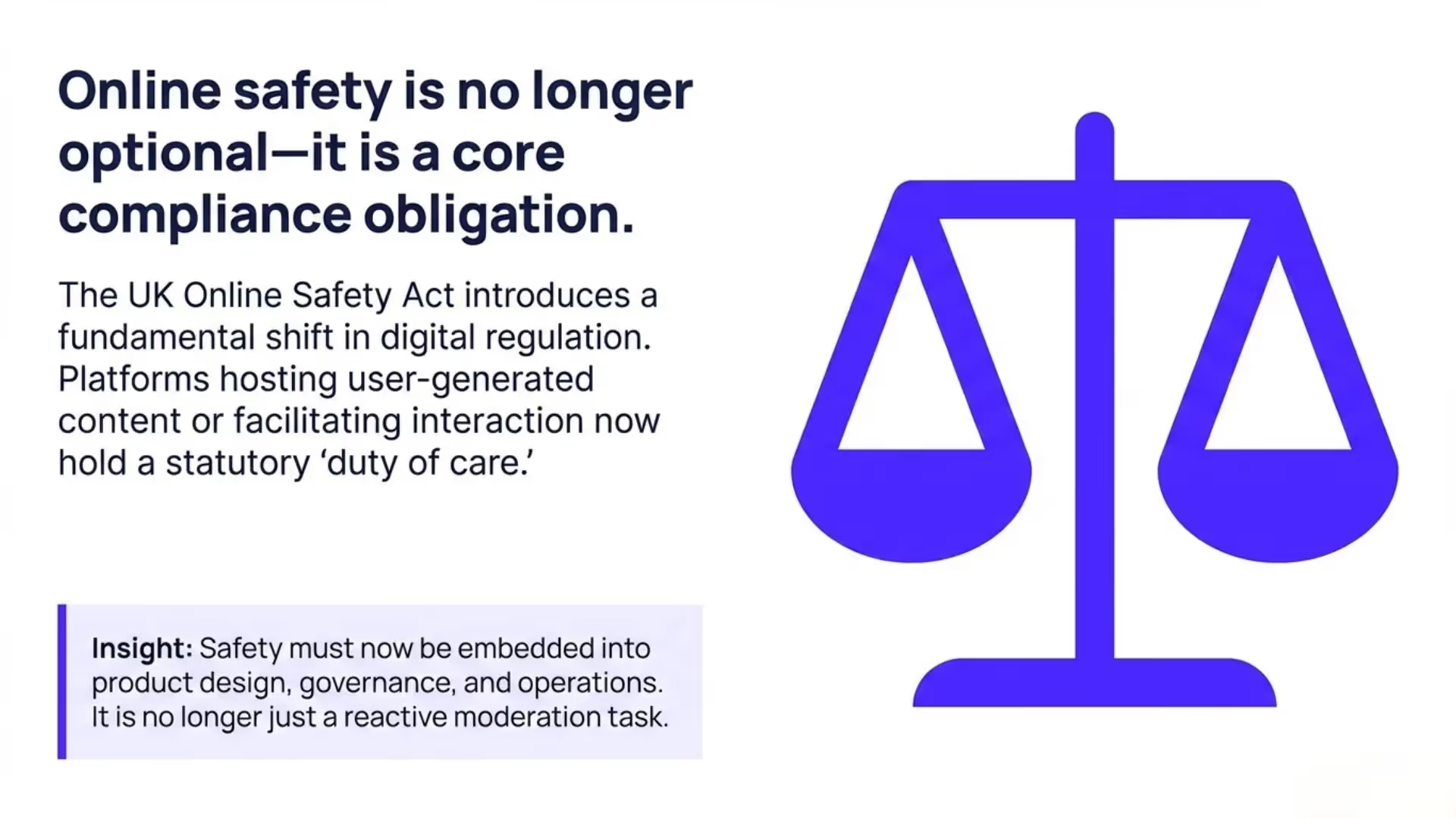
The UK Online Safety Act represents a major shift in how online services are regulated. It introduces a statutory duty of care for platforms that host user-generated content or facilitate online interaction, requiring them to take proactive steps to reduce harm.
For businesses operating in or accessible from the UK, online safety is no longer a reactive or optional consideration. It is now a core compliance obligation that must be embedded into product design, governance, and operational processes.
Understanding the scope of the Online Safety Act
The Act applies to a broad range of online services, including social media platforms, online marketplaces, community forums, video-sharing services, dating apps, and search engines.
Geographic location alone does not determine applicability. Services based outside the UK may still fall within scope if they have UK users, target the UK market, or are reasonably accessible from the UK.
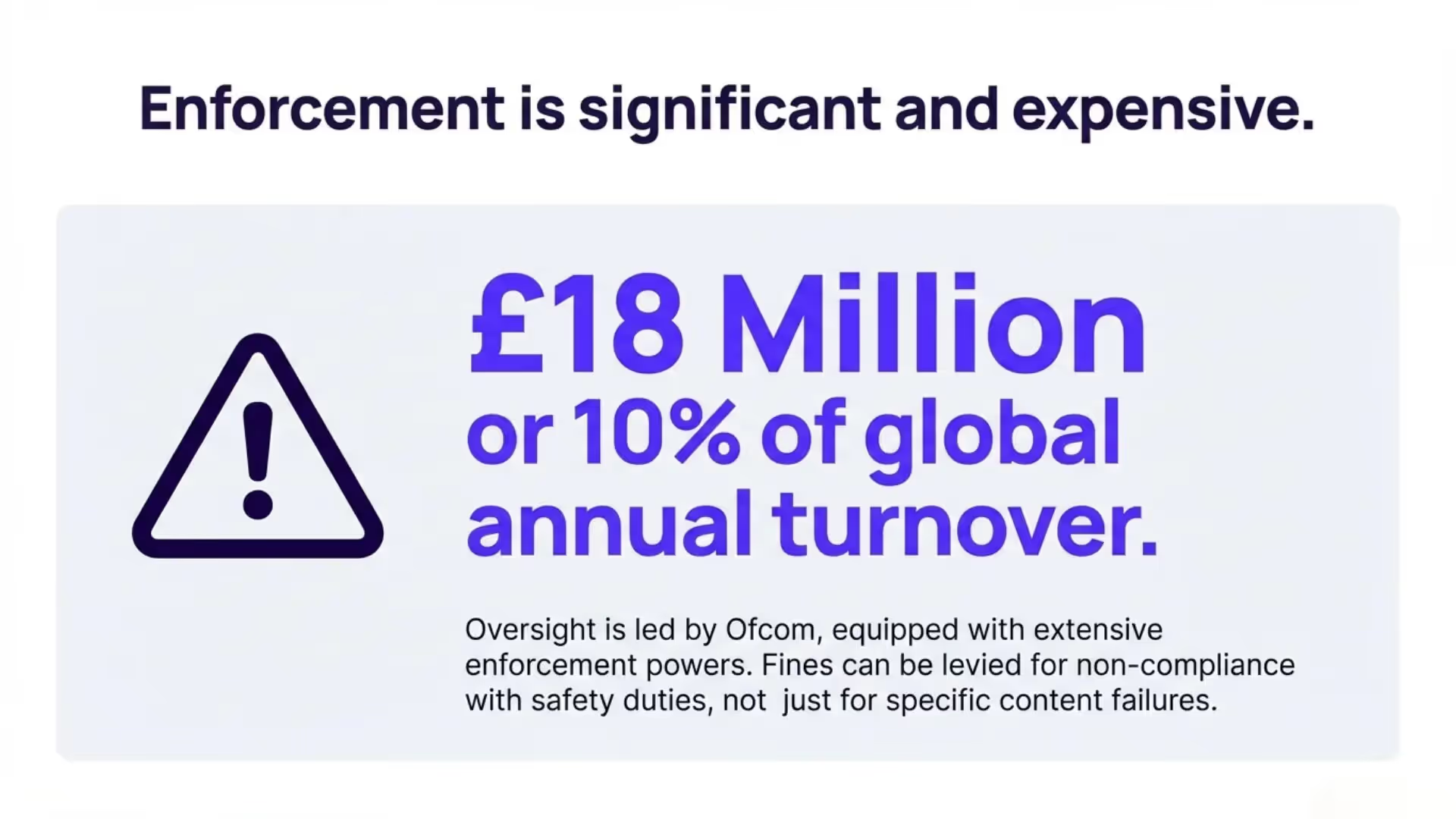
The UK regulator responsible for oversight and enforcement under the Online Safety Act is the Office of Communications (Ofcom). Ofcom has broad enforcement powers, including the ability to issue fines of up to £18 million or 10% of a company’s qualifying worldwide revenue, whichever is higher, for non-compliance.
Failure to adhere to the Online Safety Act can also trigger criminal enforcement in certain cases. Senior managers may face criminal action if they fail to ensure the company complies with Ofcom’s information requests. Ofcom can also hold companies - and, where they are at fault, senior managers - criminally liable if a provider does not comply with Ofcom enforcement notices relating to specific child safety duties, including duties connected to child sexual abuse and exploitation on the service.
Key obligations introduced by the Act
Preventing illegal and harmful activity
Platforms must take proportionate steps to reduce the risk of illegal content and behaviour, including fraud, abuse, and exploitation. This requires an understanding of who is using the service, where risk arises, and how safeguards can be applied before harm occurs.
Identity-based controls and behavioural risk signals play an increasing role in demonstrating that reasonable preventative measures are in place.
Risk assessments and accountability
The Act requires platforms to conduct and maintain documented risk assessments covering illegal content and, where relevant, child safety risks. These assessments must be kept under review as services evolve.
Businesses must also be able to evidence the decisions they make and the controls they apply, placing importance on traceability, auditability, and defensible compliance processes.
Transparency and user reporting
Platforms must provide accessible mechanisms for users to report harmful content and, for larger services, tools that give users greater control over their online experience.
Transparency obligations are designed to allow regulators and users to understand how safety measures operate in practice.
Why compliance is operationally complex
The Online Safety Act defines regulatory outcomes rather than prescribing technical solutions. While this flexibility allows businesses to tailor their approach, it also creates operational challenges.
Common issues include implementing age assurance without excessive data collection, balancing safety requirements with data protection obligations, identifying harmful behaviour at scale, and maintaining documentation that demonstrates ongoing compliance.
As a result, online safety increasingly intersects with identity verification, fraud prevention, trust and safety operations, and regulatory reporting.
How Identomat can help you adhere to the Online Safety Act
Many of the Act’s requirements ultimately depend on one foundational question: understanding who is accessing a service and whether they should be allowed to do so.

Identomat’s age verification and identity verification solutions are well aligned with the Online Safety Act’s focus on risk-based access controls. Identomat supports compliance with age-related restrictions in a way that is both effective and privacy-conscious.
For services where illegal or harmful behaviour presents elevated risk, Identomat’s identity verification capabilities can also support preventative safeguards. Stronger identity signals make it harder for bad actors to abuse platforms anonymously and help businesses demonstrate that proportionate steps have been taken to mitigate known risks. Adding Liveness Checks can reduce unauthorized access by ensuring the person completing verification is truly present and is who they claim to be. Phone & Email Verification adds an extra layer to reduce throwaway accounts and strengthen account recovery, helping platforms enforce safety actions such as restrictions or re-entry controls.
Equally important under the Act is accountability. Identomat provides structured verification records and audit trails that support internal governance and regulatory engagement. This allows businesses to evidence how age assurance and identity controls are applied, reviewed, and maintained over time.
By integrating age verification and identity intelligence into platform workflows, organisations can move beyond reactive moderation and embed online safety into their digital infrastructure. This approach aligns closely with the Online Safety Act’s emphasis on safety by design and ongoing risk management.
Looking ahead
The Online Safety Act will continue to evolve through Ofcom guidance, codes of practice, and enforcement decisions. Regulatory expectations are likely to become more explicit and more demanding over time.
For businesses, early preparation remains critical. Understanding whether services are in scope, identifying where age and identity-related risks arise, and ensuring that systems can adapt to regulatory change will be key to long-term compliance.
Treating online safety as an operational capability rather than a one-off compliance exercise will be essential in navigating the new regulatory landscape.
Now is the time to get practical: confirm whether your service is in scope, map where age and identity risks appear in your user journeys, and put controls in place that can scale and adapt as requirements mature. This is especially critical for age-gated experiences and child safety protections, where weak checks create obvious gaps.
To stay ahead, build controls that are enforceable and auditable as expectations evolve. Identomat is an all-in-one Identity Verification platform, with a comprehensive suite of KYC and IDV solutions designed to support Online Safety Act compliance. Our solutions are easy to integrate and customize, so they fit naturally into your platform - without breaking the bank.
Want to see it in action? Book a demo for a full walkthrough of our solutions and how they can support your specific requirements.
Ready to get started?
Empower your platform with Identomat's cutting-edge KYC and AML ID verification.
Book a demo
Frequently asked questions
What is the UK Online Safety Act?
It’s a major shift in how online services are regulated in the UK, introducing a statutory duty of care and requiring proactive steps to reduce harm - embedded into product design, governance, and operations.
Which services are in scope of the Online Safety Act?
A broad range of services can be covered, including social media platforms, online marketplaces, community forums, video-sharing services, dating apps, and search engines
Does the Act apply if my company is not based in the UK?
A broad range of services can be covered, including social media platforms, online marketplaces, community forums, video-sharing services, dating apps, and search engines.